
MARKETING SYSTEMS & OPERATIONS
I design and operate marketing systems that replace reactive work with structure, clarity, and scale.
Across East London Sport, I unified planning, demand intake, content production, CRM, and reporting into a single operating system — transforming marketing from a collection of campaigns into institutional infrastructure.
My work focuses on designing and governing marketing systems, not optimising isolated campaigns. Across multiple programmes running concurrently, I have treated marketing as infrastructure: controlled, measurable, and resilient.
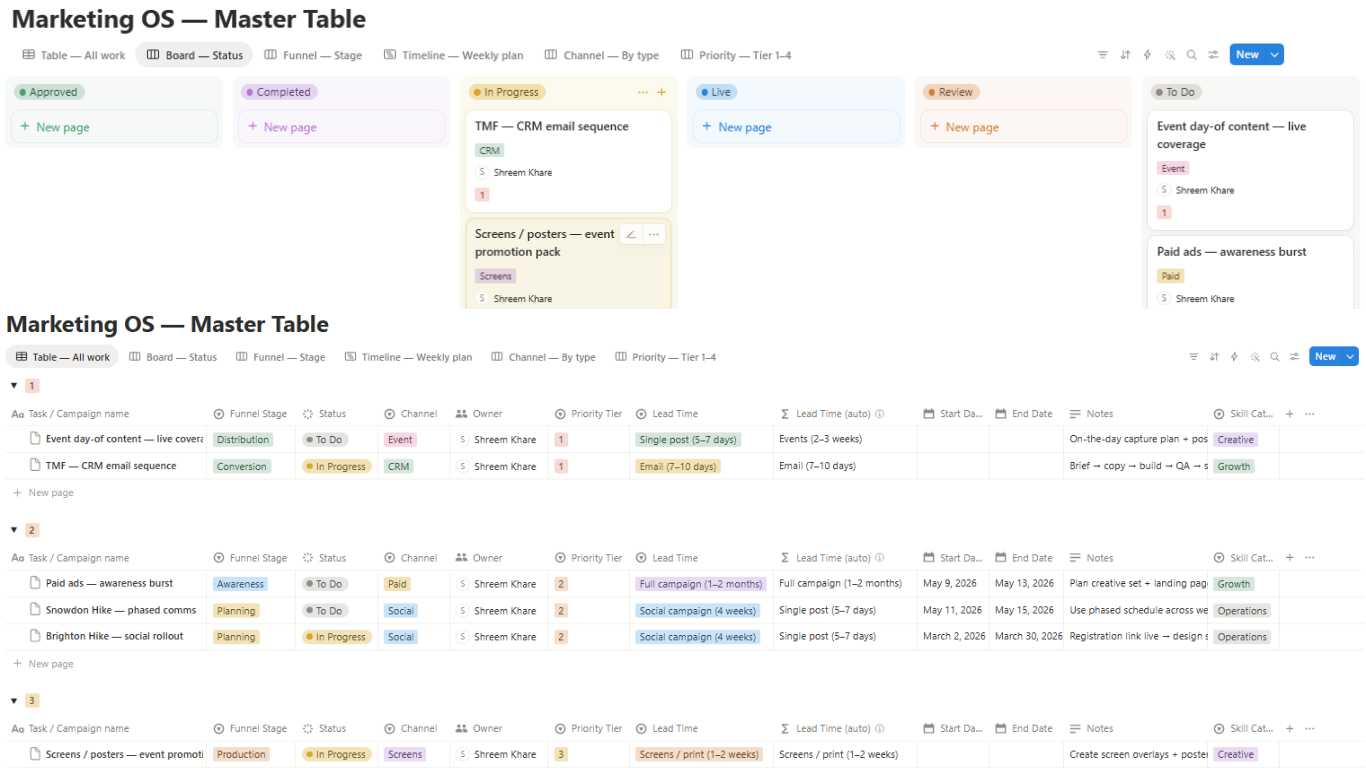
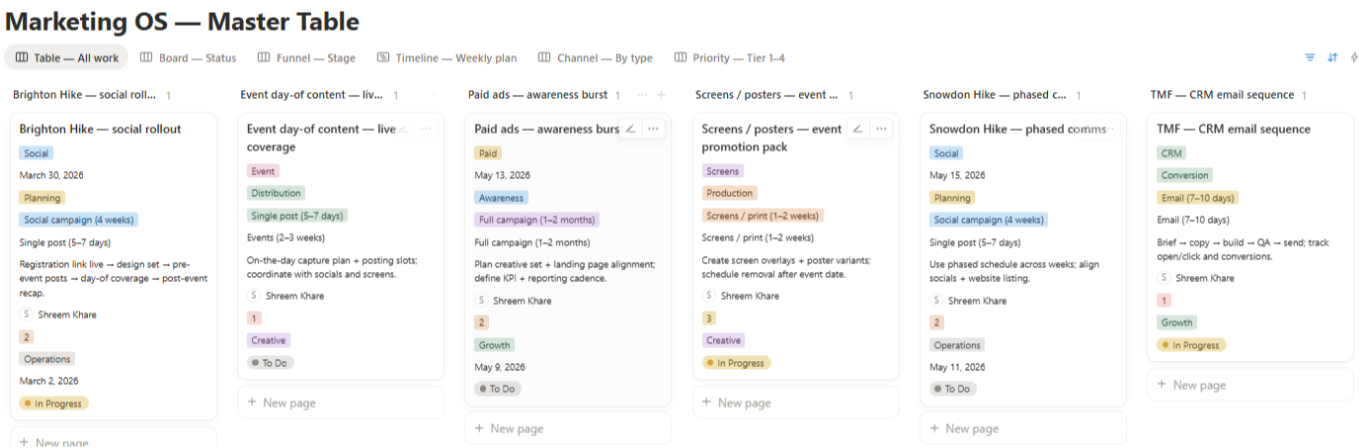
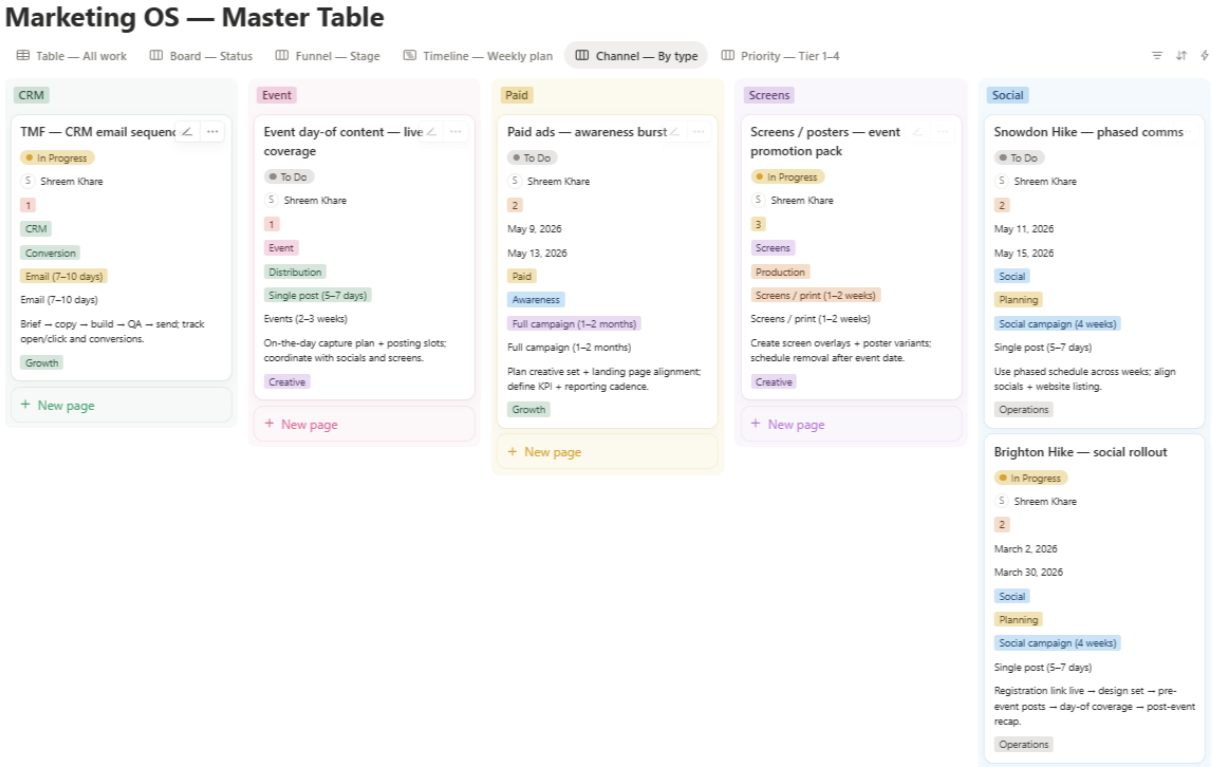
Daily tracker built in Notion - workflow categorised by Task status, assigned tiers and funnel stage. Demand Intake & Governance
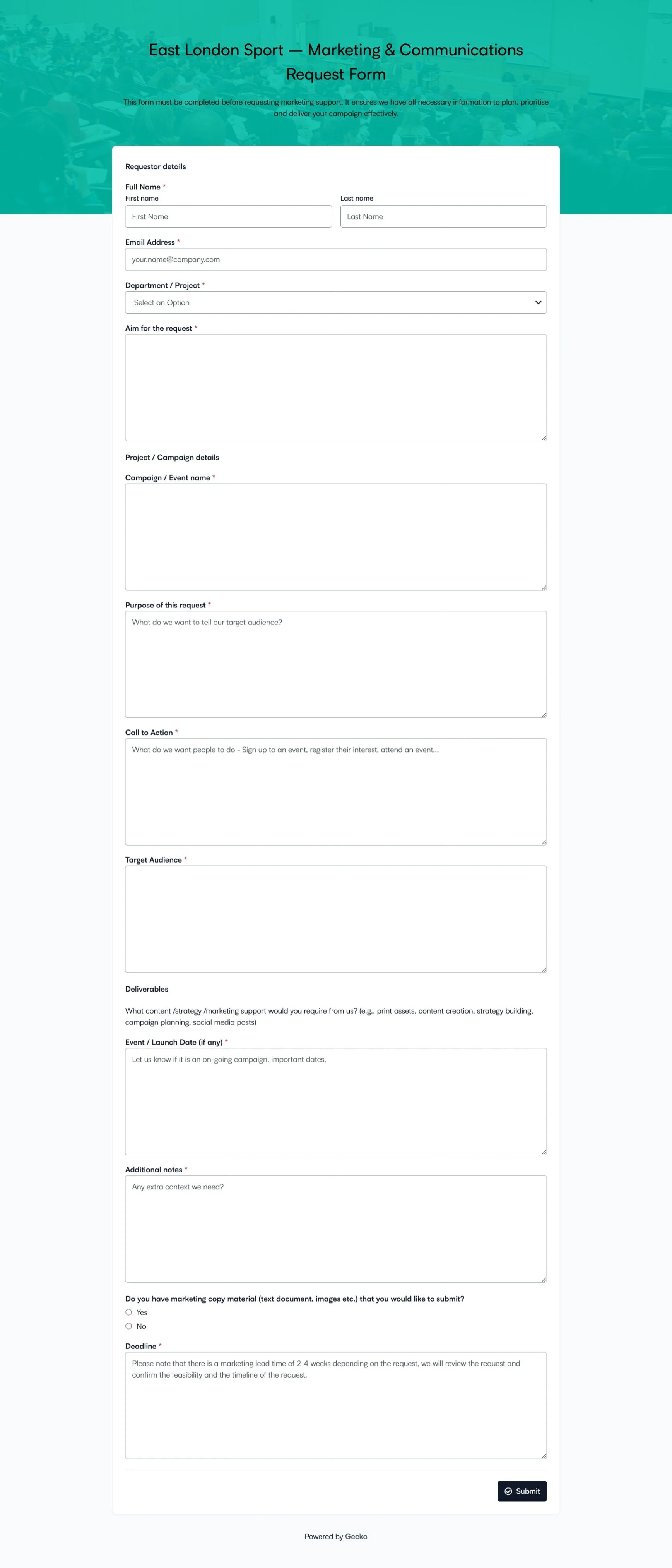
Centralising all requests - via single Gecko form sent on the generic mailbox for marketing.
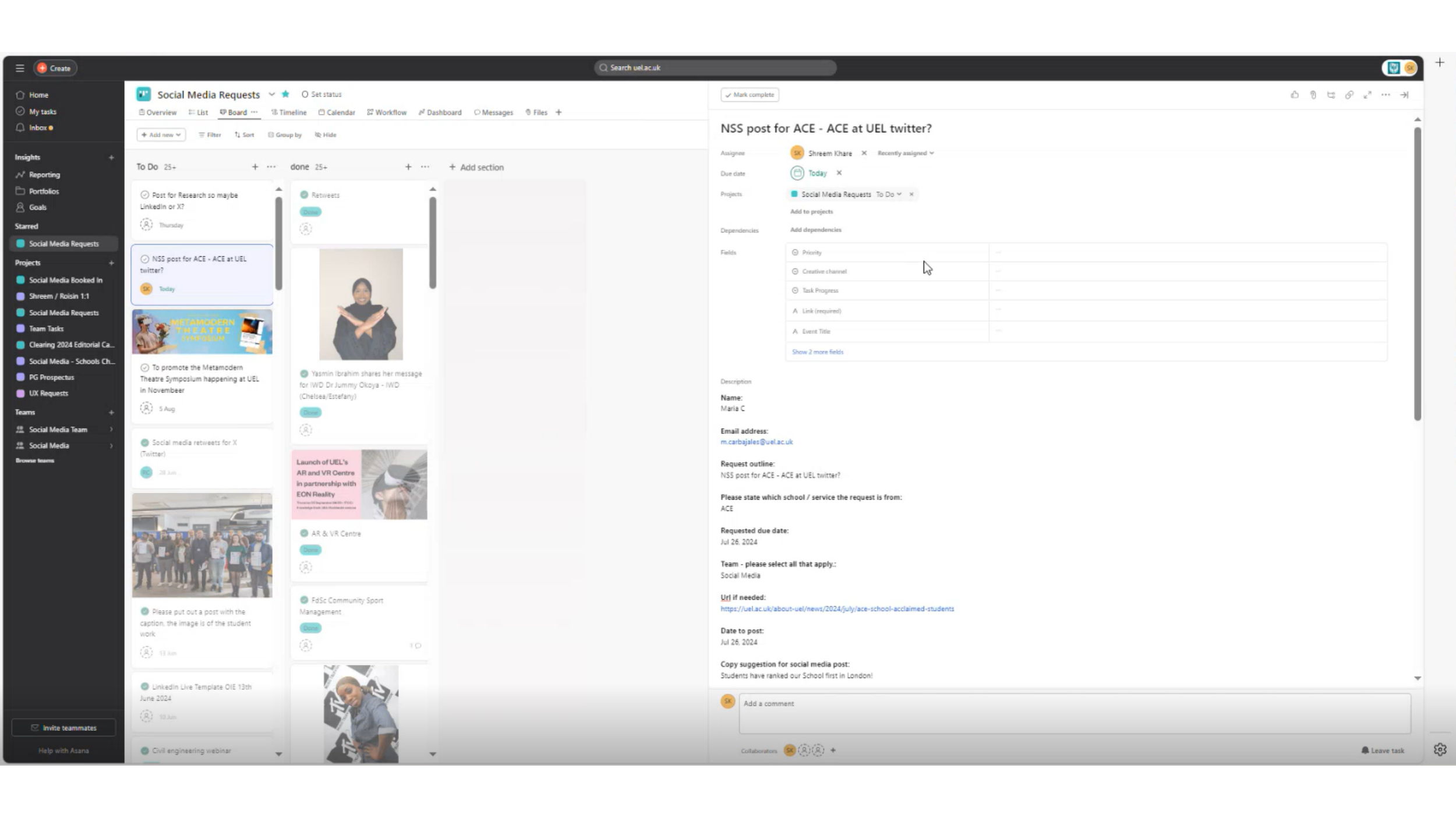
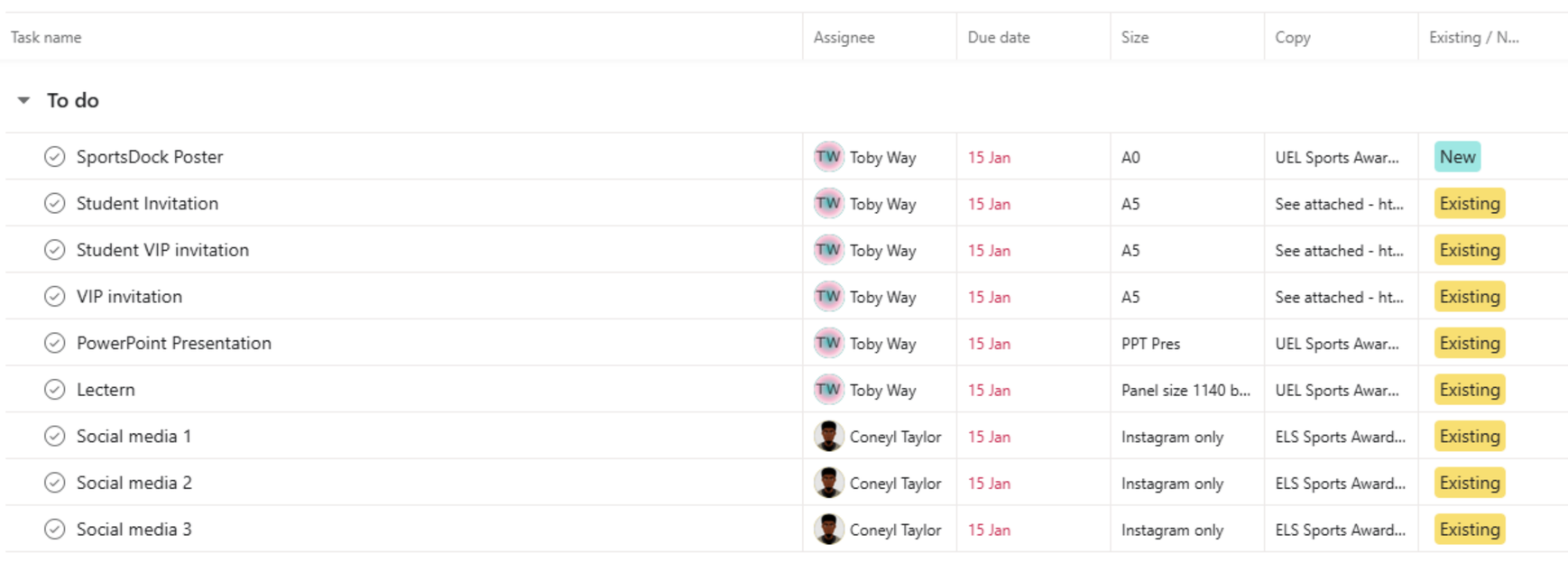
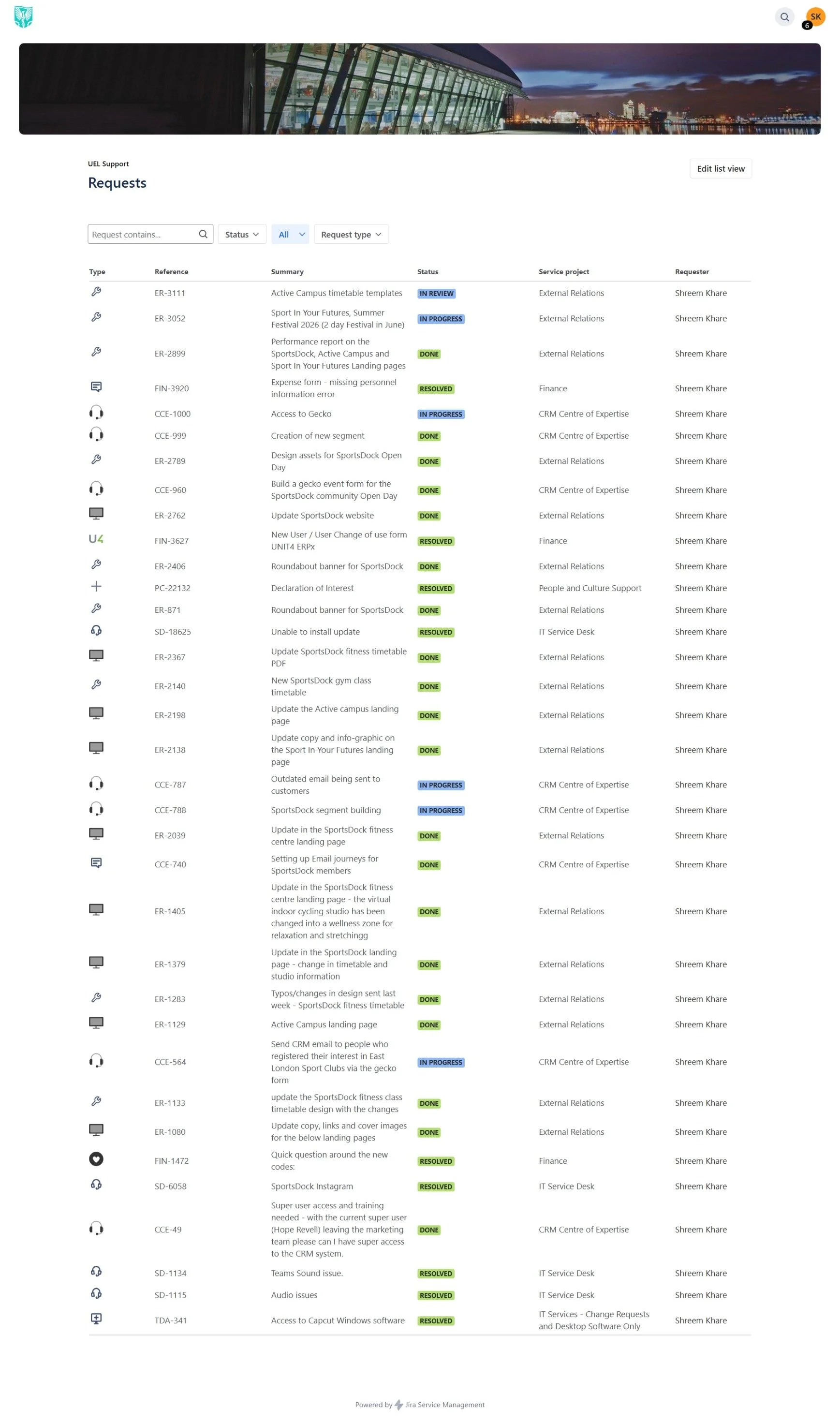
Briefs sent to stakeholders (internal or external) managed via Asana productivity app and Jira Atlassian platform.
Line managing the interns, assistants and placement students via Asana. It’s makes it easy to assign tasks, comment and feedback, set deadlines, attach content, links and track their progress all in one place.
Briefing and stakeholder management | Asana productivity platform
Marketing request form | Gecko Engage platform
Briefing and stakeholder management |Jira Atlassian platform
Campaign Operations
Evidence across programmes
East London Sport (umbrella system)
Active Campus
SportsDock / Project 1300
Sport In Your Futures
Active Campus (Wellbeing campaign)
Campaign operated as a long‑running participation system rather than an event series.
Behaviour‑led system linking social → QR → CRM → attendance
Structured comms cadence across digital and physical channels
Participation tracked weekly, not reported retrospectively
Key results
77,289 impressions
73,595 reach
1.74% engagement rate
Thousands of verified QR‑based registrations
Sustained weekly attendance across semesters
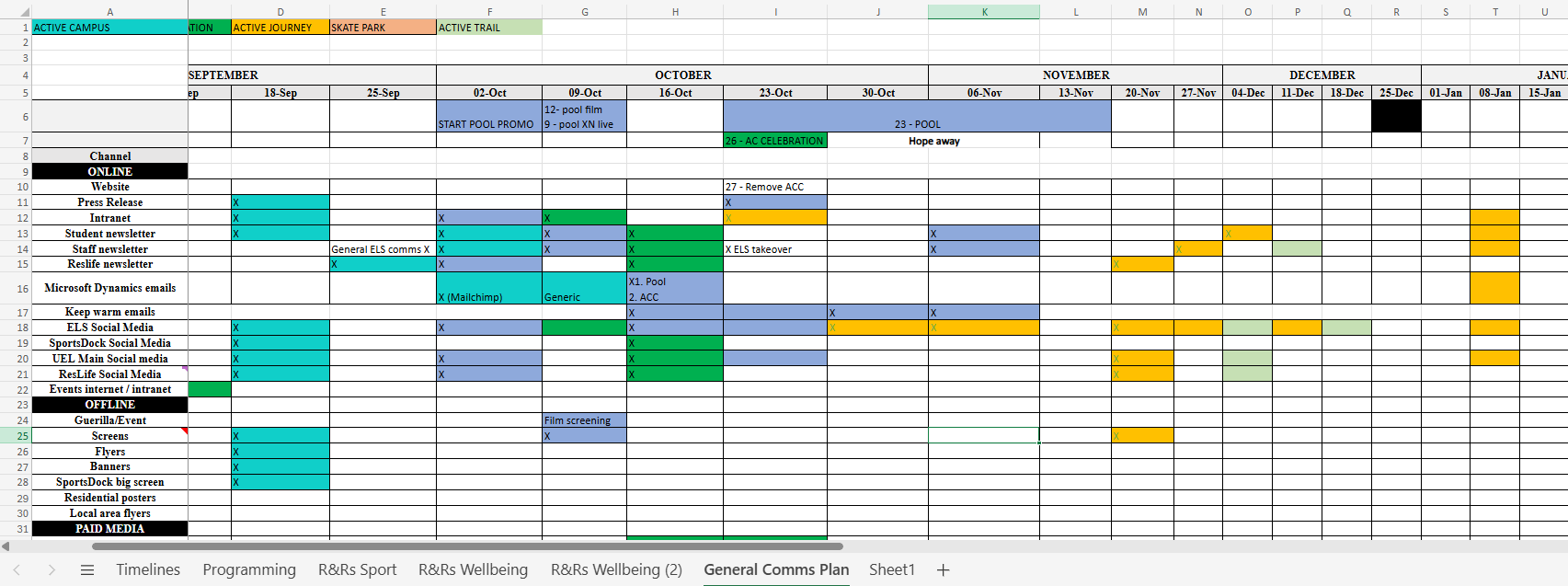
Active Campus - Comms plan | Spreadsheet tracker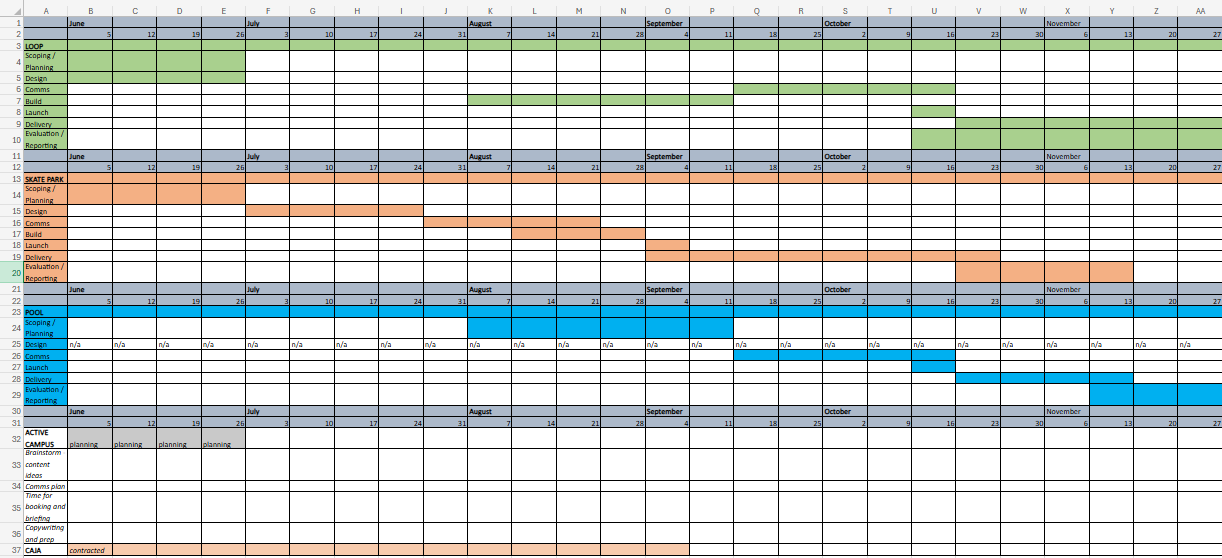
Active Campus - Campaign timelines | Spreadsheet tracker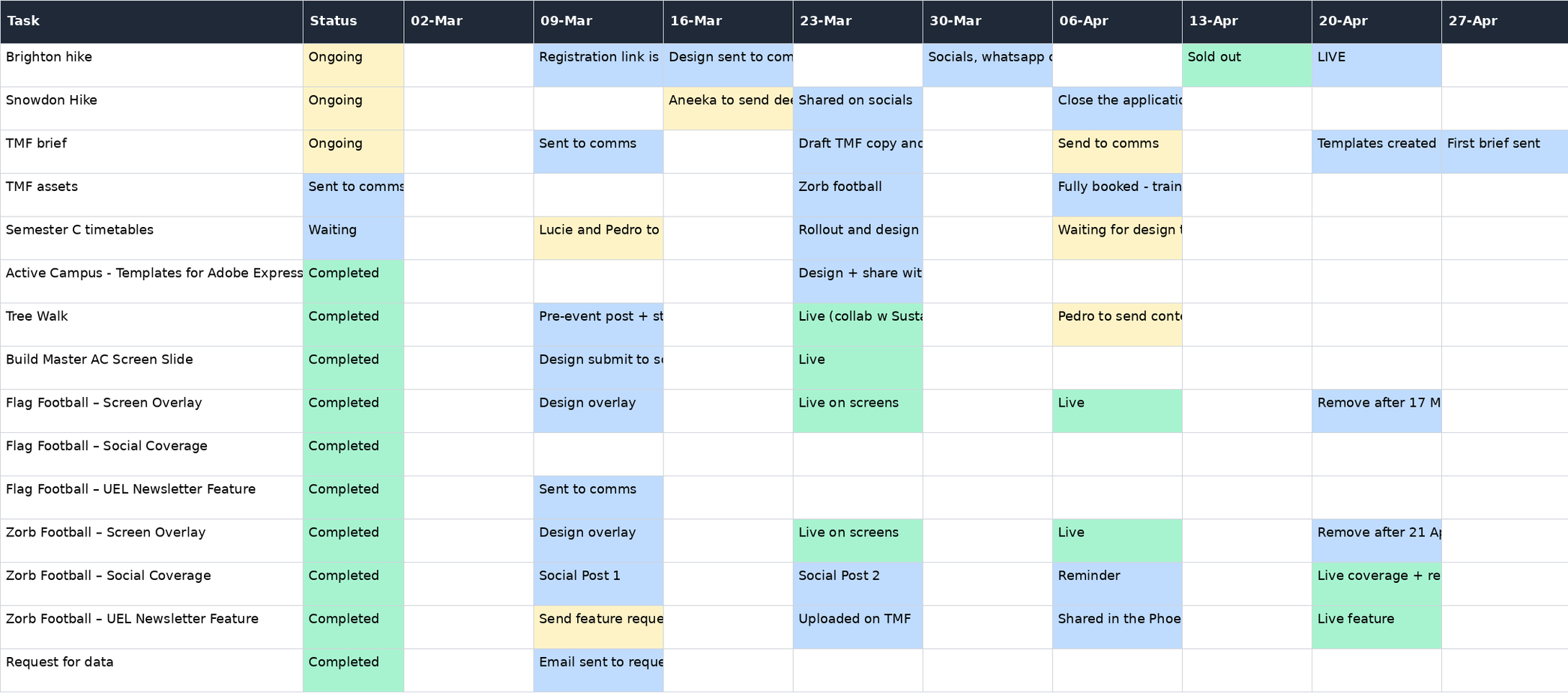
Active Campus - day-to-day tasks | Spreadsheet trackerSport In Your Futures (Community and youth programme)
A long‑running, operationally complex programme managed through systems rather than effort.
I designed a full lifecycle:
recruitment → confirmation → delivery → follow‑up → repeat participation
This allowed the programme to scale year‑on‑year without redesigning workflows.
Key results
1,730+ primary school children engaged
26 schools
200+ student workforce contributors
100% teacher recommendation rate
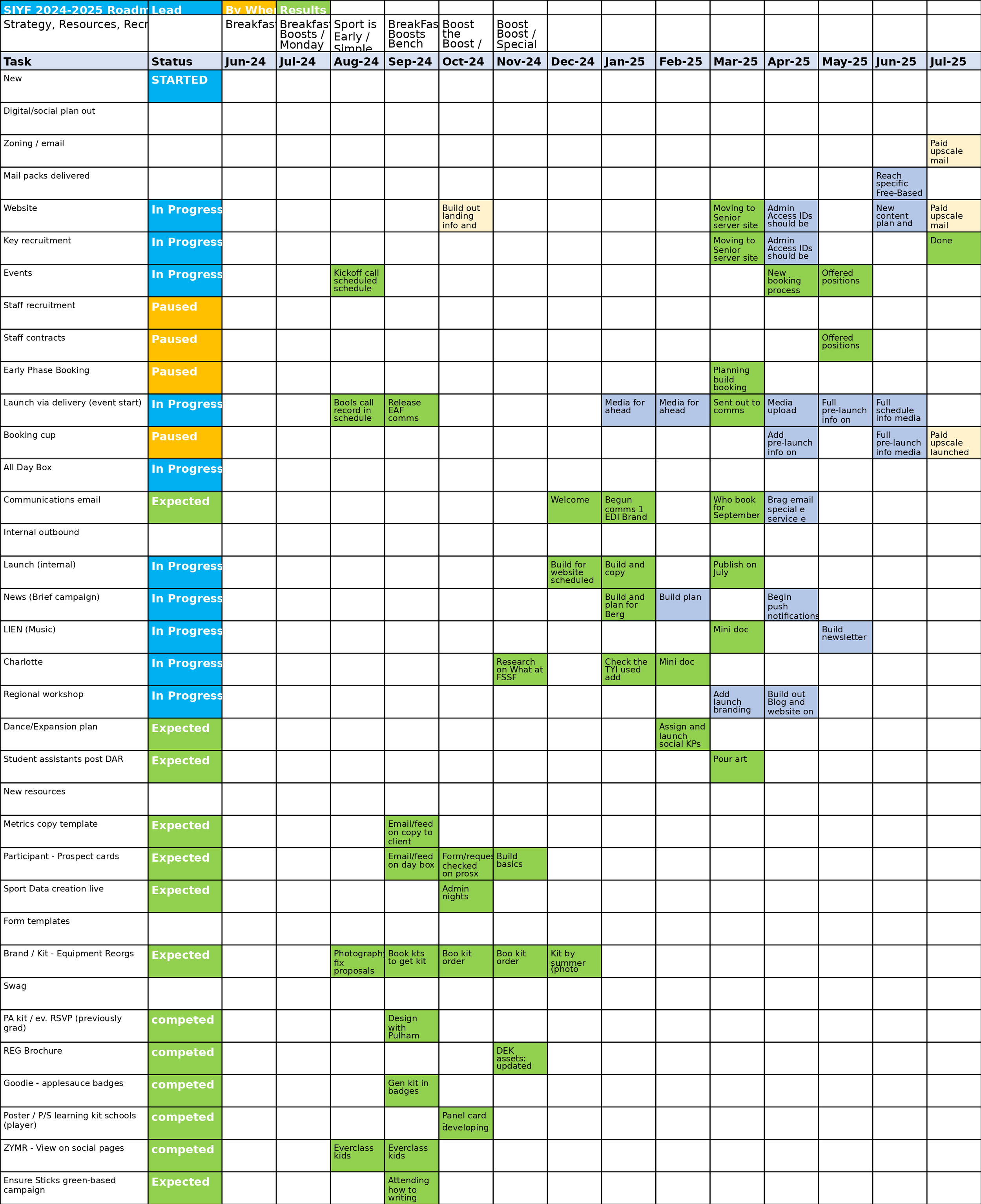
Sport In Your Futures comms plan | Spreadsheet trackerSportsDock (Multi-purpose sports complex)
Rebuilt a growth operation following four months of stagnation.
Instead of adding spend or introducing discounts, I redesigned the operational model:
single‑offer framework
clear lifecycle journeys
consistent messaging across channels
monthly governance of churn and Direct Debit
Key results
£31,371 highest recorded monthly Direct Debit
+40 net members in one month (to 1,186)
50% reduction in cancellations
Clear inflection from flat growth to sustained momentum
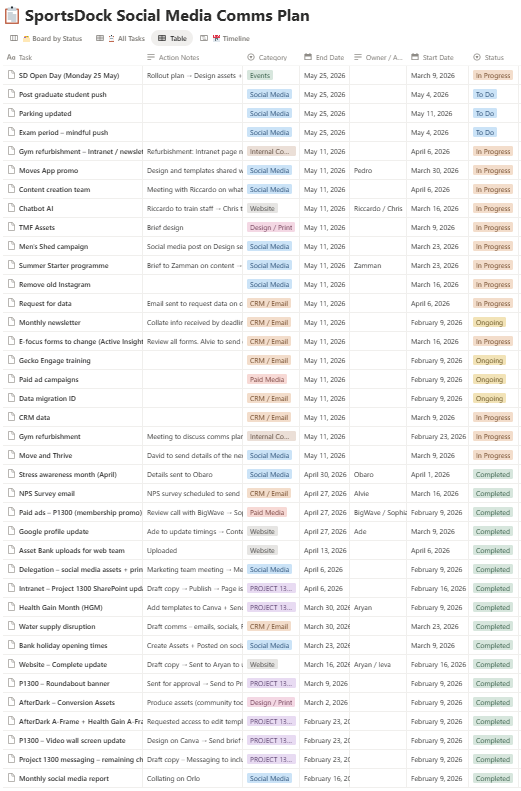
SportsDock comms plan | Notion (collaborative AI workspace)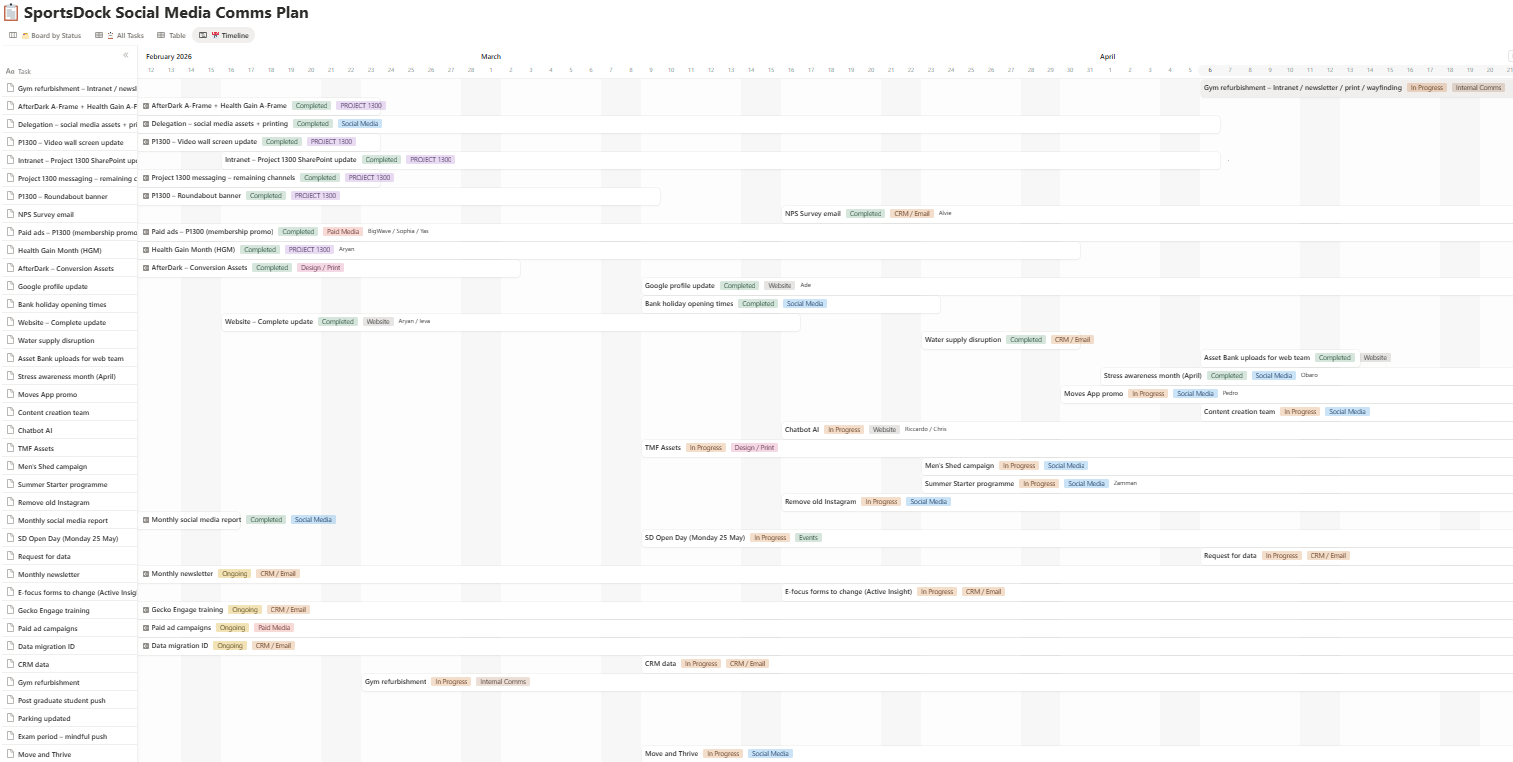
SportsDock timeline tracker | Notion (collaborative AI workspace)Budget Envelope & Actual Spend
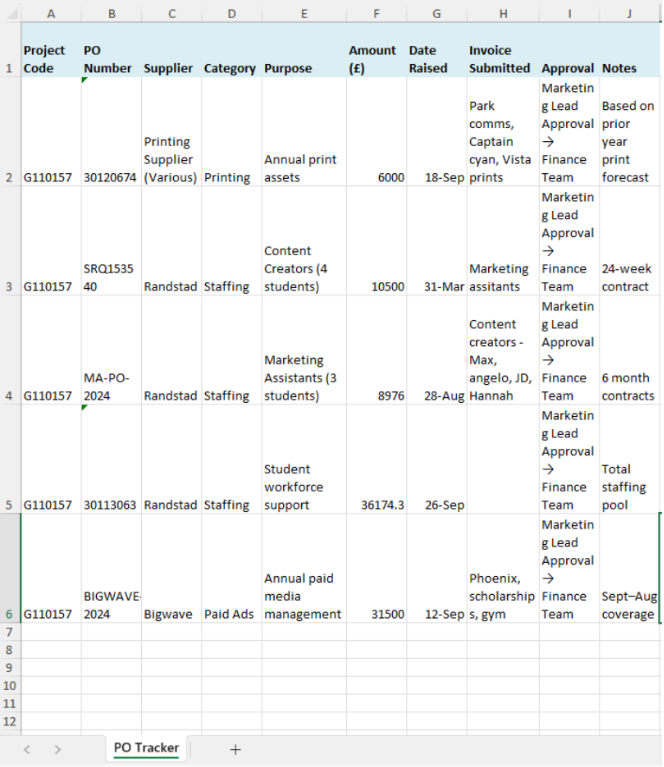
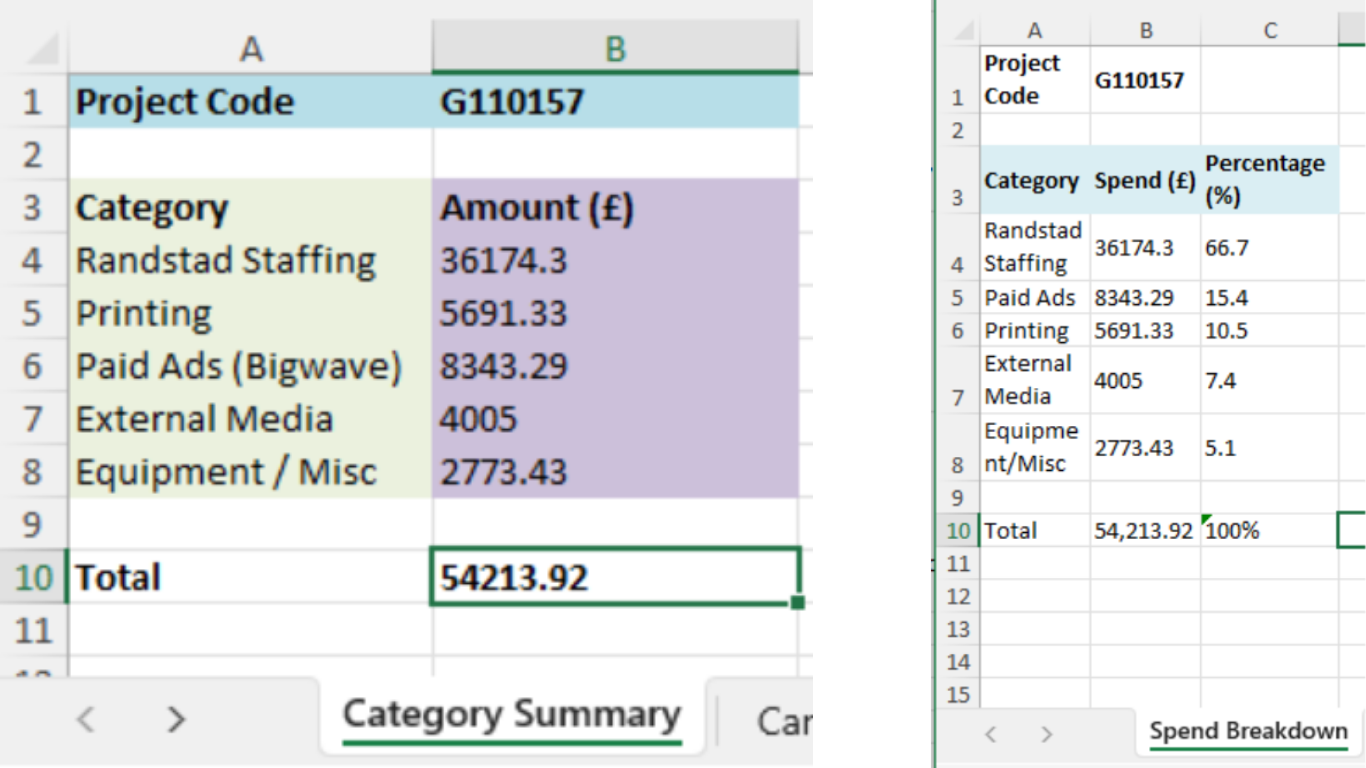
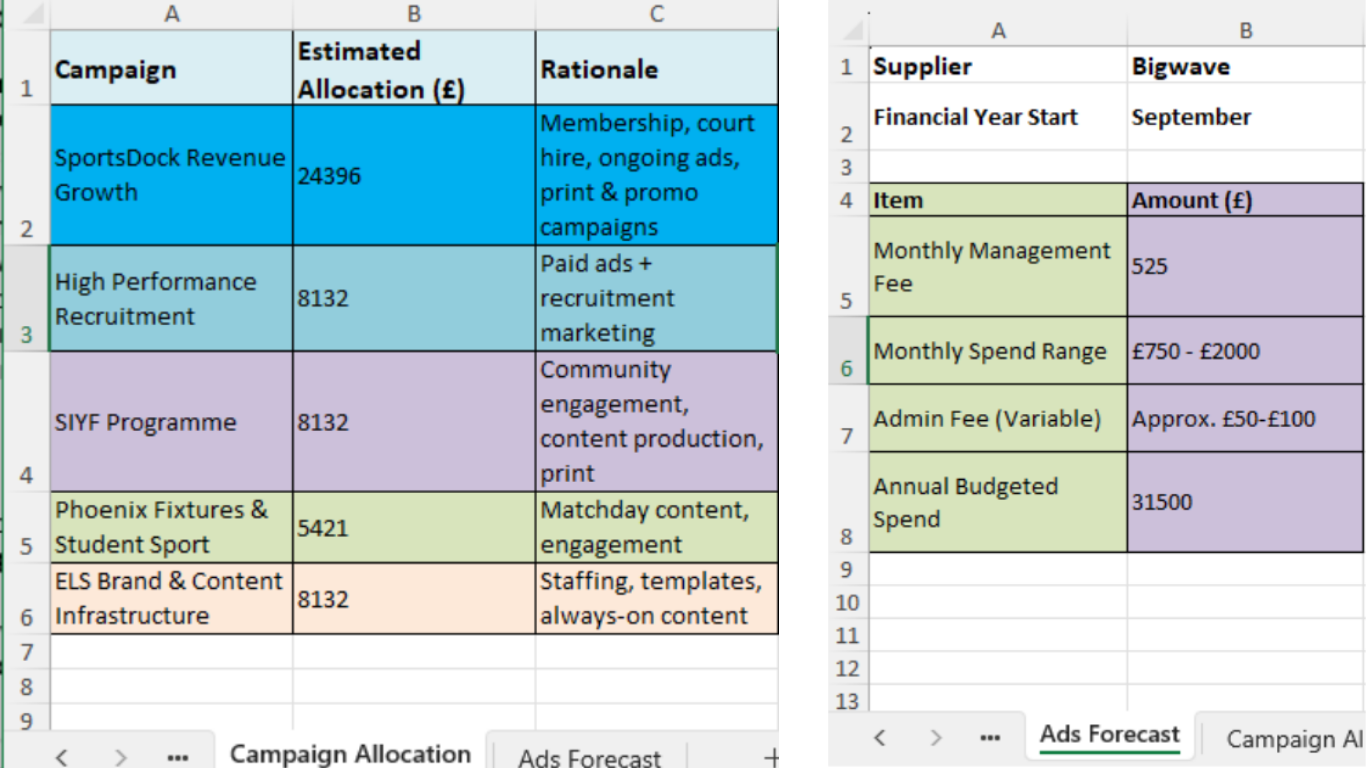
Between 2024–2026, I reduced actual marketing spend from £54.2k to £38.1k (–29.7%) while increasing delivery and outcomes. Efficiency gains of £16k were strategically reinvested into a graduate marketing assistant role, improving operational capacity, consistency, and sustainability without increasing the £100k budget envelope.
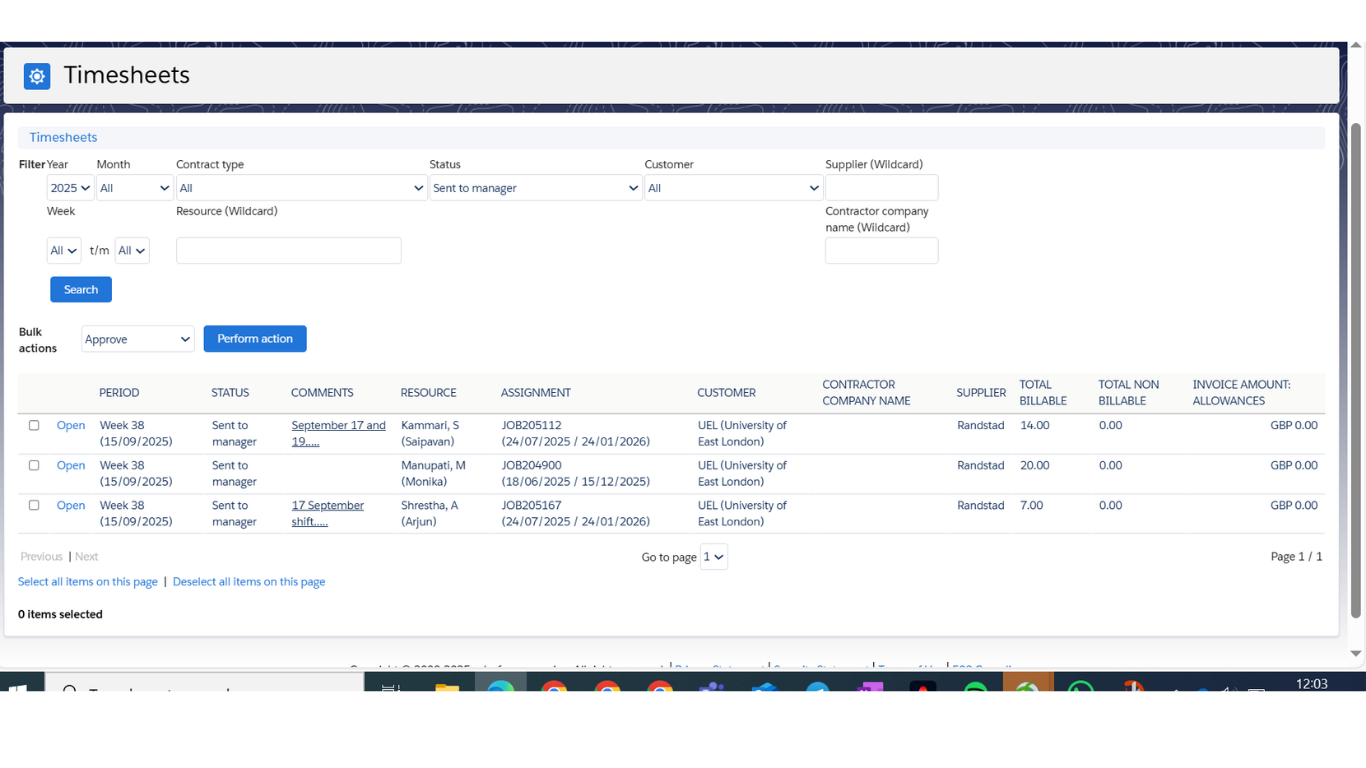
Employee and timesheet management and approval workflows | Randstad salesforces toolTotal annual marketing budget governed: £100,000
Actual spend to date: £38,122.60
Budget efficiency: Delivered outcomes across all major programmes using 38.1% of the total budget
Remaining headroom: £61,877.40, preserved intentionally for:
peak recruitment periods
campaign surges
contingency
creative experimentation
This was controlled underspend, not under‑delivery.
Paid Advertising
Actual spend: £8,490.29
 (~8.5% of £100k budget)
How the spend was deployed
No continuous “always‑on” paid spend
Budget held centrally and deployed only at:
SportsDock membership pushes (Project 1300)
priority campaign moments
time‑bound conversion windows
Comparison insight
This paid spend was lower than the notional £18k–£20k annual paid allocation, because:
organic systems were strengthened
CRM and intent signals reduced dependency on ads
Outcome
Paid media acted as an accelerator, not a crutch
Contributed to:
record £31,371 monthly direct debit (May)
+40 net live members in a single month
50% reduction in cancellations
Workforce & Content Production
Actual spend: £22,759.96
 (~22.8% of £100k budget | ~59.7% of total spend so far)
Includes:
Randstad workforce: £18,654.96
Videographers / photographers: £4,105.00
What this funded in practice
Marketing assistants
Student content creators
Selective external creatives for flagship moments only
Key optimisation decision
Reduced spend on multiple low‑output paid interns
Reallocated workforce budget toward fewer, higher‑impact content creators
Output shifted from:
one‑off campaign content
→ to reusable assets feeding social, CRM, paid ads, screens, and print
Result per £ spent
Higher asset reuse rate
Lower cost per usable piece of content
Faster turnaround across Active Campus, SportsDock, and SIYF
Print & Physical Marketing
Actual spend: £4,421.85
 (~4.4% of £100k budget)
What the spend coveredPosters, banners, signageSportsDock wayfinding and refurbishment commsMulti‑campaign physical assets
Spend disciplinePrint treated as infrastructure, not default outputFocused on:high‑footfall areaslong‑life assetsreuse across campaigns
ResultReduced duplicationLonger asset lifespanStrong on‑site reinforcement without repeat spend
Equipment & Content Infrastructure
Actual spend: £2,018.70
 (~2.0% of £100k budget)
Strategic decisionReplace outdated, unreliable equipmentOne‑off capital investment instead of recurring outsourcing
Why it matteredOld equipment created hidden costs:failed contentreshootswasted staff timeexternal supplier reliance
Return on investmentEnabled consistent in‑house content productionReduced future videography costsSupported multi‑campaign output from a small spend
Publicity & Miscellaneous
Actual combined spend:£431.80 (~0.4% of £100k budget)
Publicity & advertising: £252.07Miscellaneous operational costs: £179.73
This category was intentionally kept minimal and tightly controlled.